


All blogs
How to Reduce Cart Abandonment in E-commerce CRO

11 min read

June 13, 2025
Table of Contents

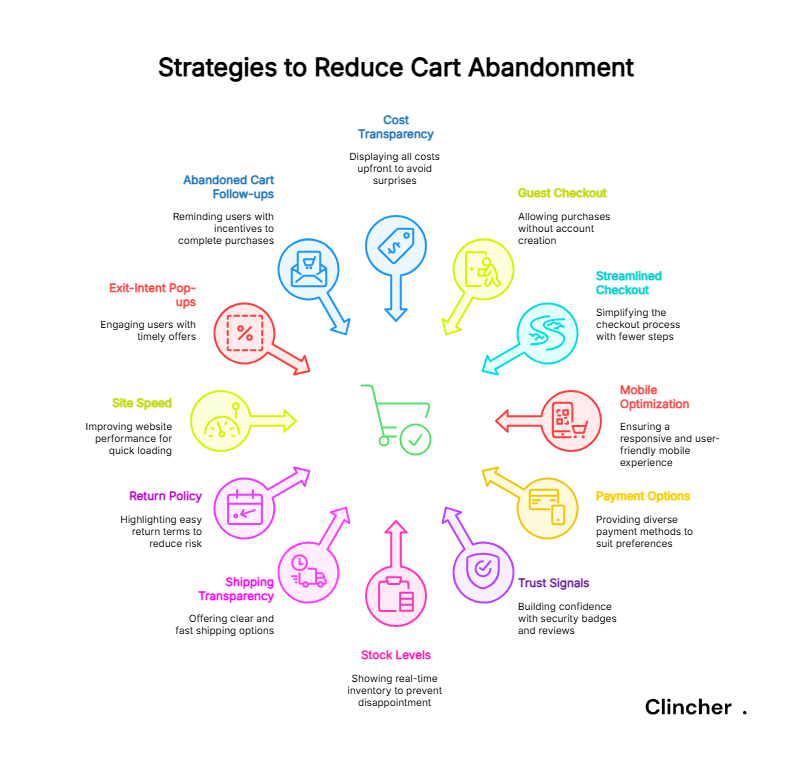
To reduce cart abandonment in E-commerce, make sure to follow these 12 steps:
- Display total costs up‑front – show product price, shipping, taxes, and fees before the cart to eliminate “sticker shock.”
- Offer guest checkout – let shoppers buy without creating an account; invite registration only after payment.
- Streamline the checkout flow – reduce pages and form fields to the minimum; use autofill, address lookup, and a visible progress bar.
- Optimize for mobile – ensure responsive design, large tap targets, and mobile wallets (Apple Pay, Google Pay) for one‑tap payment.
- Provide multiple payment options – include major cards, PayPal, digital wallets, and buy‑now‑pay‑later services to match shopper preferences.
- Highlight trust signals – place SSL badges, payment‑security icons, customer reviews, and clear privacy statements near the payment form.
- Show accurate, real‑time stock levels – prevent out‑of‑stock surprises by syncing inventory across product, cart, and checkout pages.
- Offer transparent, fast shipping – publish delivery times, costs, and free‑shipping thresholds; provide real‑time carrier calculators where possible.
- State an easy return policy – summarize key terms (return window, free returns) near the checkout button to reduce perceived risk.
- Improve site speed & stability – compress images, lazy‑load non‑critical assets, and monitor uptime; even a 1‑second delay can cut conversions.
- Use exit‑intent pop‑ups wisely – trigger a timely discount or reminder when a user moves toward closing the tab or back‑navigating.
- Automate abandoned‑cart follow‑ups – send a series of reminder emails/SMS with dynamic cart content, social proof, and limited‑time incentives to win the sale back.
Cart abandonment constitutes a significant obstacle for e-commerce businesses, characterized by a global average abandonment rate of 69.57% reported in 2023.
This statistic highlights the urgent necessity for implementing effective strategies in conversion rate optimization (CRO). The initial step in addressing cart abandonment involves identifying the diverse reasons contributing to customer shopping cart abandonment.
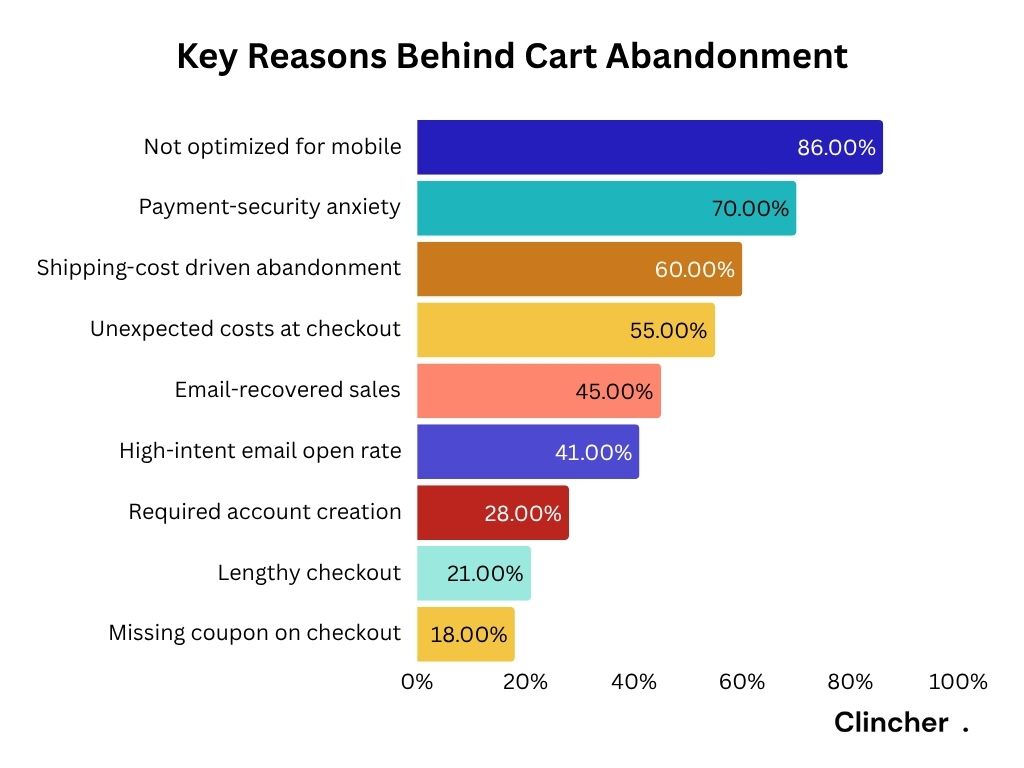
Research conducted by the Baymard Institute indicates that unforeseen costs constitute the primary reason for 55% of shoppers abandoning their carts, citing unexpected fees, including shipping charges, as their primary reason for leaving. Additionally, 21% of customers abandon their carts due to the complexities associated with lengthy checkout processes.
Security concerns also play a critical role, as evidenced by data indicating that 70% of customers hesitate to complete their purchases due to apprehensions regarding credit card theft and other security issues. Consequently, addressing these factors is essential for minimizing abandonment rates.
A foundational strategy for minimizing cart abandonment entails optimizing the checkout process. Research conducted by Shopify and BigCommerce illustrates that optimizing the checkout experience, deploying a single-page checkout system, and minimizing the number of mandatory form fields can result in substantial reductions in abandonment rates.
By simplifying data entry and ensuring that the checkout flow is intuitive, e-commerce platforms can effectively cater to the 21% of users who abandon their carts due to complicated processes.
Personalizing the shopping experience is also crucial for mitigating cart abandonment. Leveraging data-driven insights allows e-commerce businesses to deliver customized recommendations and follow-up emails to customers who have abandoned their carts. According to Retainful, such targeted emails can recover up to 45% of lost sales, boasting an open rate of 41.18%, significantly higher than the typical marketing email open rate of just 21% (Source: BigCommerce). By harnessing these insights, businesses can not only encourage customers to revisit their abandoned carts but also foster a sense of connection and loyalty, ultimately driving conversions.
Additionally, incorporating trust signals, such as security badges and customer reviews, can greatly enhance customer confidence. Research highlighted by AlexanderJarvis.com indicates that effectively utilizing trust signals can boost conversion rates by as much as 32%. When customers feel secure during the checkout process, they are less likely to abandon their carts. Therefore, prominently displaying security badges and transparent return policies can alleviate fears surrounding online shopping, encouraging users to complete their purchases.
Analyzing the relationship between product types and cart abandonment rates is a vital component of reducing cart abandonment. High-ticket items generally experience higher rates of abandonment due to the extended decision-making time required by consumers, as noted in studies conducted by Persado and Elastic Path. E-commerce businesses should recognize this trend and consider providing flexible payment options, such as installment plans, for high-value products to help mitigate abandonment.
Moreover, the importance of mobile optimization cannot be overstated. According to Firework, mobile users exhibit a staggering cart abandonment rate of 85.65%, markedly higher than the 69.75% rate observed for desktop users. This discrepancy often arises from non-optimized mobile experiences, where slow page loads and intricate navigation deter customers. Thus, ensuring a seamless and user-friendly mobile shopping experience is paramount in reducing cart abandonment.
Finally, providing incentives like free shipping or discounts can act as a powerful motivator for customers. Research indicates that over 60% of consumers abandon their carts due to shipping costs. By providing free shipping or clearly communicating shipping policies, e-commerce businesses can alleviate this barrier and facilitate customer progression to checkout.
In summary, effectively reducing cart abandonment in e-commerce necessitates a holistic strategy encompassing the streamlining of the checkout process, personalization of user experiences, the establishment of trust through security measures, an understanding of product dynamics, mobile optimization, and the provision of attractive incentives. This multifaceted approach not only addresses the immediate concerns of cart abandonment but also opens the door to exploring the best tactics for recovering those abandoned carts, ensuring that businesses can reclaim lost opportunities and enhance their overall conversion strategies.
What are the Best Tactics to Recover Abandoned Carts?
Best tactics to recover abandoned carts include a multifaceted strategy that addresses customer behavior.
Retargeting Ads
Building on the need for effective strategies, one of the foremost tactics is retargeting ads.
Research conducted by Hotjar in 2023 indicates that retargeting ads can effectively reduce cart abandonment rates by approximately 6.5% and boost online sales by nearly 20%. Retargeting ads act as visual reminders, effectively highlighting abandoned products and encouraging customers to return to the website.
For instance, Tirendo, a tire manufacturer, reported a remarkable 161% increase in recovery rates after implementing retargeting ads in 2023. This finding was highlighted by researchers B Jiang and O Turut in their study published in the Journal of Business Research in 2024.
Retargeting ads effectively bring back about 26% of abandoners to the website, underscoring their importance in your recovery arsenal, as shown in a study by Moosend.
Exit-intent Popus
In addition to retargeting, implementing exit-intent popups provides another avenue for recovering abandoned carts. Following the identification of customer behavior patterns, businesses can utilize targeted interventions to enhance their recovery efforts. These exit-intent popups activate when a visitor is about to leave your site, thereby providing a crucial last-minute opportunity for engagement and conversion.
According to OptinMonster, well-crafted exit-intent popups can lead to substantial reductions in cart abandonment. These popups can capture leads by offering incentives such as discounts or free shipping, encouraging users to reconsider their decision before departing. Additionally, they gather valuable insights through exit surveys, helping you understand the reasons behind cart abandonment, as noted by Picreel.
Moreover, the timing of recovery efforts significantly influences their effectiveness.
Abandoned Cart Emails
Abandoned cart emails play a pivotal role in this context. Data from Rejoiner indicates that the first email sent within one hour of cart abandonment tends to achieve the highest open rates, with approximately 40% of businesses adhering to this effective practice. Furthermore, sending follow-up emails within six hours can lead to a conversion rate exceeding 10%, according to Campaign Monitor. Implementing a structured email sequence, including reminders and personalized content, can enhance the effectiveness of your recovery strategy.
Customer Incentives
Incentives, such as limited-time discounts, are also effective in motivating customers to finalize their purchases. Cart recovery campaigns that incorporate discounts demonstrate a significantly higher conversion rate of 20-25% compared to those that do not offer discounts, as reported by CartBoss. This tactic addresses common reasons for cart abandonment, such as perceived high prices or indecision. For example, offering a strategic discount can create a sense of urgency, compelling customers to act swiftly to take advantage of the offer.
Personalization
Personalization serves as a crucial cornerstone for successful cart recovery strategies, as it enhances customer engagement and satisfaction. Tailoring your communication based on customer behavior and preferences can significantly boost engagement rates. Personalized abandoned cart emails remind customers of specific items they were interested in while also suggesting complementary products, as suggested by Karl Mission. This targeted approach fosters a deeper connection with the customer and increases the likelihood of conversion.
Remarketing Campaigns
Remarketing, through various channels such as social media and Google Ads, is indispensable for recovering abandoned carts. Remarketing strategies keep your brand at the forefront of potential customers' minds, effectively reminding them of their unfinished purchases and encouraging them to return, as indicated by SEO Zoom. By utilizing data from abandoned carts, businesses can craft targeted campaigns that address customer needs and preferences, leading to improved recovery rates.
Social Proof
Leveraging social proof can enhance trust and encourage customers to complete their purchases. Displaying customer reviews and testimonials on your site can significantly boost conversion rates by reassuring potential buyers about the quality and reliability of your products, according to Emarsys. Highlighting positive experiences from prior customers alleviates concerns and motivates new customers to finalize their transactions.
A/B Testing & Ongoing CRO
Lastly, employing A/B testing to systematically refine recovery strategies is essential for optimizing campaign effectiveness and maximizing conversion rates. By experimenting with different tactics, such as varying email subject lines, timing, and promotional offers, you can identify what resonates best with your audience. This data-driven approach allows you to optimize your messaging and delivery methods effectively.
Ultimately, the successful recovery of abandoned carts hinges on a nuanced understanding of consumer behavior and effective communication strategies. As we consider the overall landscape of e-commerce, it becomes crucial to explore the underlying reasons behind cart abandonment. By identifying these root causes, businesses can not only enhance their recovery efforts but also lay the groundwork for preventing future abandonment, ultimately fostering a more resilient sales strategy.
Why Do Customers Abandon Their Online Shopping Carts?
Customers abandon their online shopping carts for several reasons that significantly affect their purchasing decisions. Understanding why your visitors abandon carts is critical for e-commerce businesses seeking to lower abandonment rates and enhance conversion metrics.
Research identifies multiple factors contributing to cart abandonment, presenting persistent challenges for online retailers in optimizing their sales strategies. Here, we delve into the primary reasons behind cart abandonment and their implications for your business.
Unexpected Shipping Costs
Among the most significant factors influencing cart abandonment is the imposition of unexpected shipping costs, which significantly affects consumer purchasing decisions.
Research conducted by the Baymard Institute reveals that approximately 39% of consumers abandon their shopping carts due to additional costs, including shipping fees, taxes, and other charges.
A 2024 Statista study reinforces this point, revealing that nearly 50% of U.S. consumers abandoned purchases due to additional costs. The frustration caused by unexpected hidden fees can significantly tarnish the overall shopping experience, fostering feelings of deception and reducing consumers' willingness to finalize their purchases.
Such unexpected charges disrupt a customer's mental calculation of total expenses, triggering hesitation and ultimately leading to cart abandonment, as noted by BigCommerce.
Required Account Creation
Another barrier that affects the purchasing decision is the mandatory requirement to establish a new user account, which many perceive as an unnecessary barrier to a swift and efficient checkout experience. Many online shoppers prefer a seamless and quick checkout process. Forcing them to create an account can feel like an unnecessary hurdle, resulting in 28% of users abandoning their carts, as highlighted by a study published by Flexport in 2023.
This scenario frequently occurs when online shoppers aim for a quick purchase but encounter an extensive registration process, which discourages them from completing their transactions.
Add-to-cart Now, Buy Later
Customers frequently conduct research to buy later, rather than completing a purchase at that moment. Research conducted by Hotjar in their report "E-Commerce User Behavior Analysis" indicates that numerous shoppers utilize their shopping carts as temporary holding spaces while they compare prices and gather additional information about various products. This behavior can result in abandonment when the customer decides to postpone the purchase for later consideration, reflecting a common practice among e-commerce consumers who wish to make informed decisions.
Payment Security Concerns
Concerns regarding the security of payment information significantly contribute to cart abandonment rates among online shoppers. A study published by TheRetailExec, titled "The Impact of Security Concerns on Online Shopping," found that approximately 25% of consumers abandon their shopping carts due to distrust surrounding the security of their payment information. Shoppers are increasingly aware of data breaches and cyber threats, leading them to hesitate before entering sensitive information on unfamiliar websites. Consequently, establishing trust through visible security measures becomes crucial for online retailers to alleviate these concerns.
Tiresome Checkout Process
A long and confusing checkout process can lead to frustration and abandonment. Research shows that 21% of shoppers abandon their carts because the checkout process is too complicated or lengthy. Consumers anticipate a seamless checkout experience, and any friction encountered during this process can significantly deter them from successfully completing their transactions. This is particularly relevant in mobile commerce, where users expect quick and efficient checkouts. Therefore, optimizing the checkout process is essential for reducing abandonment rates, as emphasized by Kinsta's "Mobile E-Commerce Optimization Report."
Learn How Clincher Studio Decreased Cart Abandonment For a Jewelry Brand here.

No Coupons Or Discounts Available
Many shoppers also find themselves unable to locate coupon codes or discounts at the point of checkout. This circumstance often results in significant frustration, as approximately 18% of consumers report abandoning their carts due to an inability to locate valid discount codes during checkout. Offering clear and upfront information about promotions can enhance the customer experience and minimize drop-offs due to coupon-related frustrations.
Lack Of Speedy Delivery
Furthermore, the lack of express shipping options serves as a substantial deterrent for many consumers who prioritize fast delivery. In a world where consumers expect fast delivery, not offering expedited shipping can lead to cart abandonment. Research from Statista, published in their 2024 report "Shipping Expectations in E-Commerce," indicates that delivery speed plays a crucial role in consumer decision-making, leading many to abandon their carts when they perceive delivery times as excessive.
Technical Issues
Technical issues, including website errors and crashes, significantly contribute to cart abandonment as they disrupt the user experience and frustrate potential buyers. In 2024, it was reported that 22% of consumers encountered issues like website downtime or slow loading speeds during the checkout process, prompting them to leave without completing their purchase, as highlighted by Stripe's "E-Commerce Performance Metrics Report."
Understanding these barriers not only informs strategies for recovery but also lays the groundwork for proactive measures to enhance overall customer experience. By addressing these concerns, such as unexpected costs, account creation hurdles, payment security issues, and complicated checkout processes, retailers can create a more seamless shopping experience.
This, in turn, can lead to higher completion rates and ultimately drive revenue growth in a competitive online marketplace. It's essential to examine the best tactics available to recover abandoned carts, ensuring that businesses can effectively re-engage customers and convert missed opportunities into successful transactions.

Clincher Studio Research Team
Author


Grow Your Ecommerce Store With Clincher
Get in touch and we'll make sure to provide actionable insights for your store even before the call starts.
Let's talk
Let's talk


©2026 Clincher Studio LLC. All rights reserved.